How Is Web Design Pricing Determined? How Much Does a Website Cost?
Web design pricing varies by items such as page count, design type, features, content production, SEO, integrations and maintenance. A guide to cost factors, comparing quotes and contracts.
 Melis Ay ÜreğenSoftware Engineer16 min read
In Brief
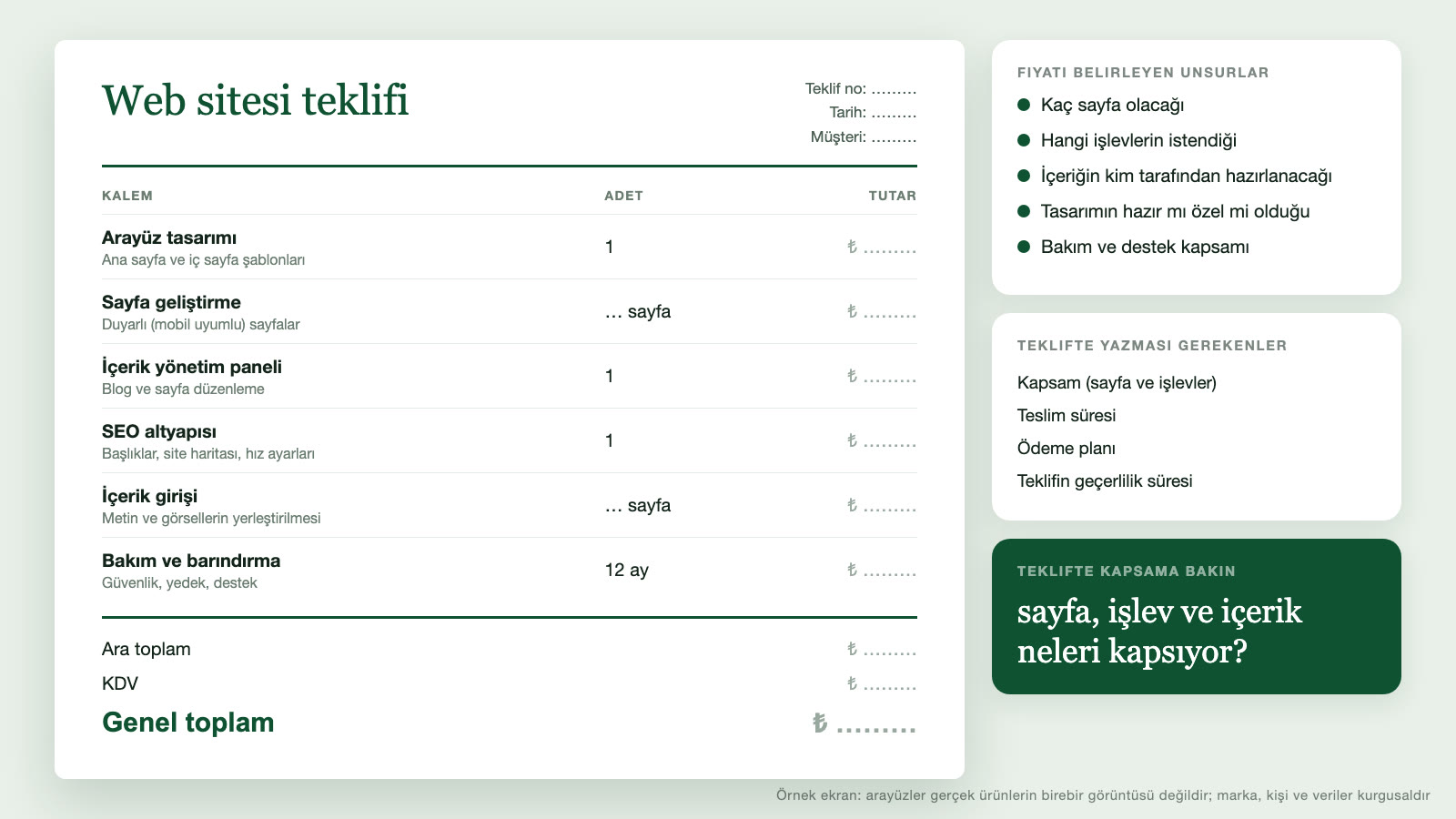
Web design prices are not a single number; they depend on scope. The main factors are the number and complexity of pages, the choice of a ready-made theme or custom design, features such as e-commerce and integrations, content and visual production, SEO, multilingual support, the team’s experience, and post-launch maintenance and hosting costs. Quotes should be compared by their scope, not just by the total price.
- Price should be considered together with the site’s scope and the results you are aiming for; the question "what do we want?" should be answered before the question "how much?".
- In addition to the design fee, annual costs such as hosting, domain, maintenance, content, security and updates make up the total cost of ownership.
- When comparing quotes, check the scope, revisions, deliverables, ownership and maintenance terms in writing; very low prices can signal a narrow scope.
Table of Contents
The question “How much does it cost to have a website built?” is asked very often online, and you will find pages that try to answer it with a single number. The truth is that the same words “web site” can describe very different jobs: A one-page brochure site and a multilingual, integrated e-commerce site with hundreds of products differ widely in effort, time and cost.
In this article we explain what determines web design prices: the price items, the difference between a ready-made theme and custom design, service scope, cost drivers by site type, annual costs, comparing quotes, the hidden costs of low prices, the payment plan and contract clauses. We deliberately don’t give specific price figures, because figures change quickly with the scope of the work, the timing and the market, and they can be misleading. Instead, we offer a framework that lets you ask the right questions for your own project and evaluate quotes soundly.
Why does the price of web design vary so much?
A website is much more than the pages you see. Behind it are strategy, content, design, development, testing, security, hosting, SEO and project management. The price gap between different quotes mostly comes from which of these items are included, the team’s experience and how custom the work is. By analogy: The answer to “How much does it cost to build a house?” changes with the size of the house, its materials, its location and its architecture.
Two basic factors set the price: The size of the work (how many pages, which features) and the nature of the labor (who will work on it, for how long, with what expertise). On top of these come additional items such as content, visual production, software licenses and maintenance.
Main items that affect the price
Scope: Number of pages and content
Scope is one of the main determinants of price. The difference in effort between a five-page corporate brochure site and a fifty-page, multi-section corporate site is large.
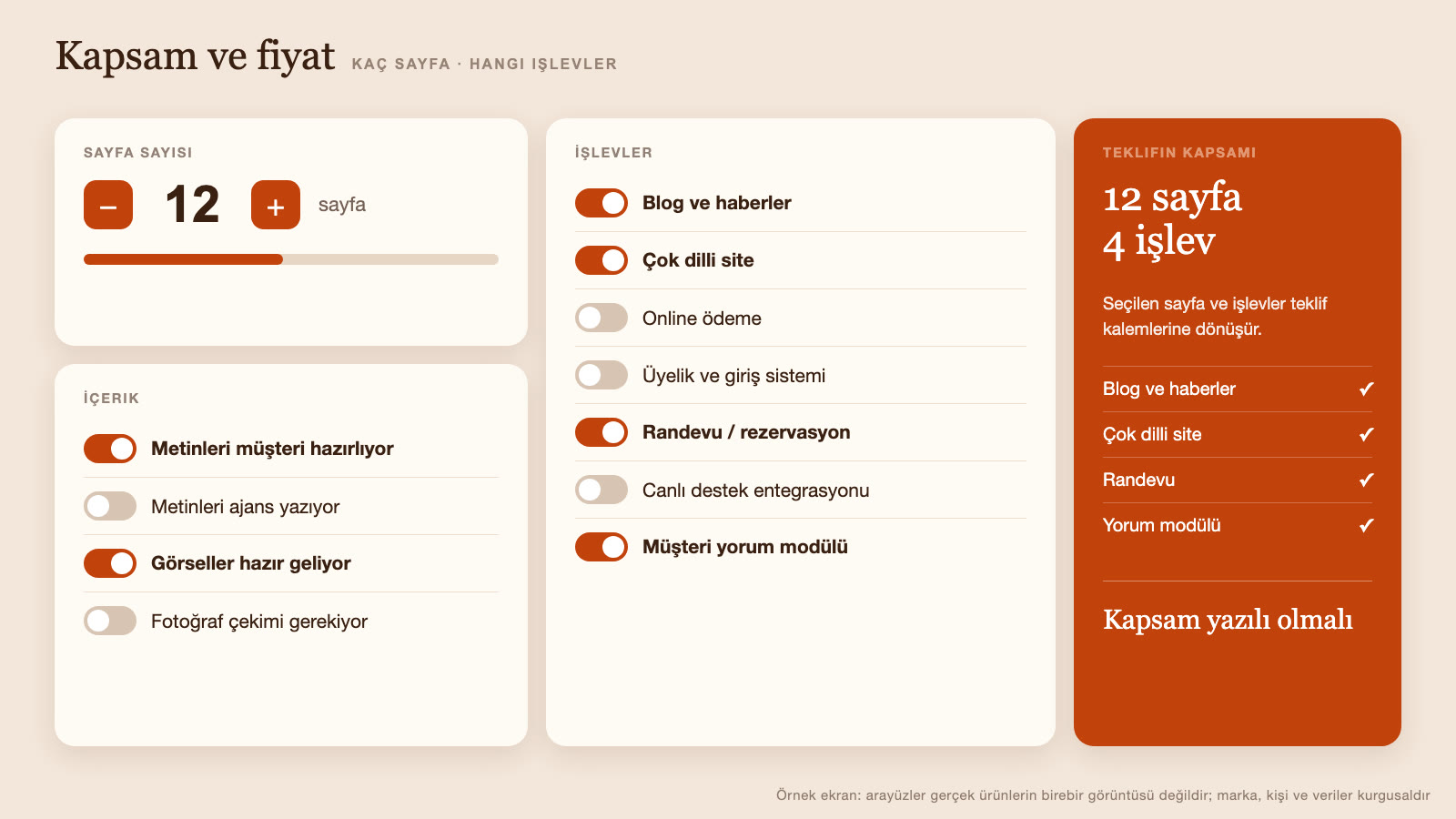
- Number and variety of pages: Every different page type (home, service detail, team, blog, gallery) takes design and development effort.
- Amount of content: The amount of text, images and video, and who will produce them.
- Complexity: The difference between a simple information page and interactive tools, calculators or multi-step forms.
- Content management: Do you want to update the site yourself? That takes a content management panel and training.
Type of design
The design approach directly affects the price (detailed in the section below).
Features and integrations
- Forms and automations: A simple contact form, or advanced forms such as appointments, quote calculation and file upload.
- E-commerce: Product catalog, cart, payment and shipping integrations, inventory and order management; these features can raise the price (our e-commerce site guide).
- Membership and customer panels: User login, profiles, personalized content.
- Appointment, reservation and payment systems.
- Third-party integrations: Connections with systems such as accounting, CRM, email marketing, maps, social media feeds and live chat.
- Multilingual support: Extra content, translation and setup effort for each language.
- Custom software development: Custom business logic that a ready-made solution cannot cover.
Content and visual production
Are the site’s text, photos, videos, icons and illustrations included? Professional copywriting, corporate photography, video production and custom visual design are separate items. Using stock images can lower cost, but it can reduce the site’s originality and trust. For production items, see our guides on product photography and brand films.
Strategy, research and brand
Does the quote include strategy work on the site’s goal, target audience, page structure and messaging? Is the brand identity (logo, colors, typeface) ready, or does that need to be prepared too? A site built without strategy can be done more cheaply, but its link to the goal may stay weak. For related work, see our guides on corporate identity and marketing strategy.
SEO, speed and measurement
Are basic SEO (title, description, URL structure, redirects, sitemap), speed optimization, mobile compatibility tests and analytics setup included in the price as standard, or are they a separate service? You can ask for a measurable speed target: By the thresholds Google counts as “good,” the largest content should load within 2.5 seconds (LCP), interaction response should be 200 milliseconds or less (INP) and layout shift should stay at 0.1 or less (CLS) (web.dev, Core Web Vitals). Core Web Vitals are used in Google’s ranking systems (Google Search Central, page experience). Ongoing SEO content and link work is priced as a separate service (our SEO guide).
Team, experience and working model
The price gap between a freelancer, a small studio, a mid-sized agency and a large agency comes from the team’s experience, the number of specialists, process discipline, support and continuity. The team’s experience is one item that affects the quote, but the most expensive option may not be the best fit for every business.
Timeline and urgency
Projects that must be delivered in a very short time may need extra resources and raise the price. A reasonable timeline helps balance both quality and cost.
Ready-made theme or custom design?
One of the decisions that affects price is whether the design will be built from a ready-made template or from scratch.
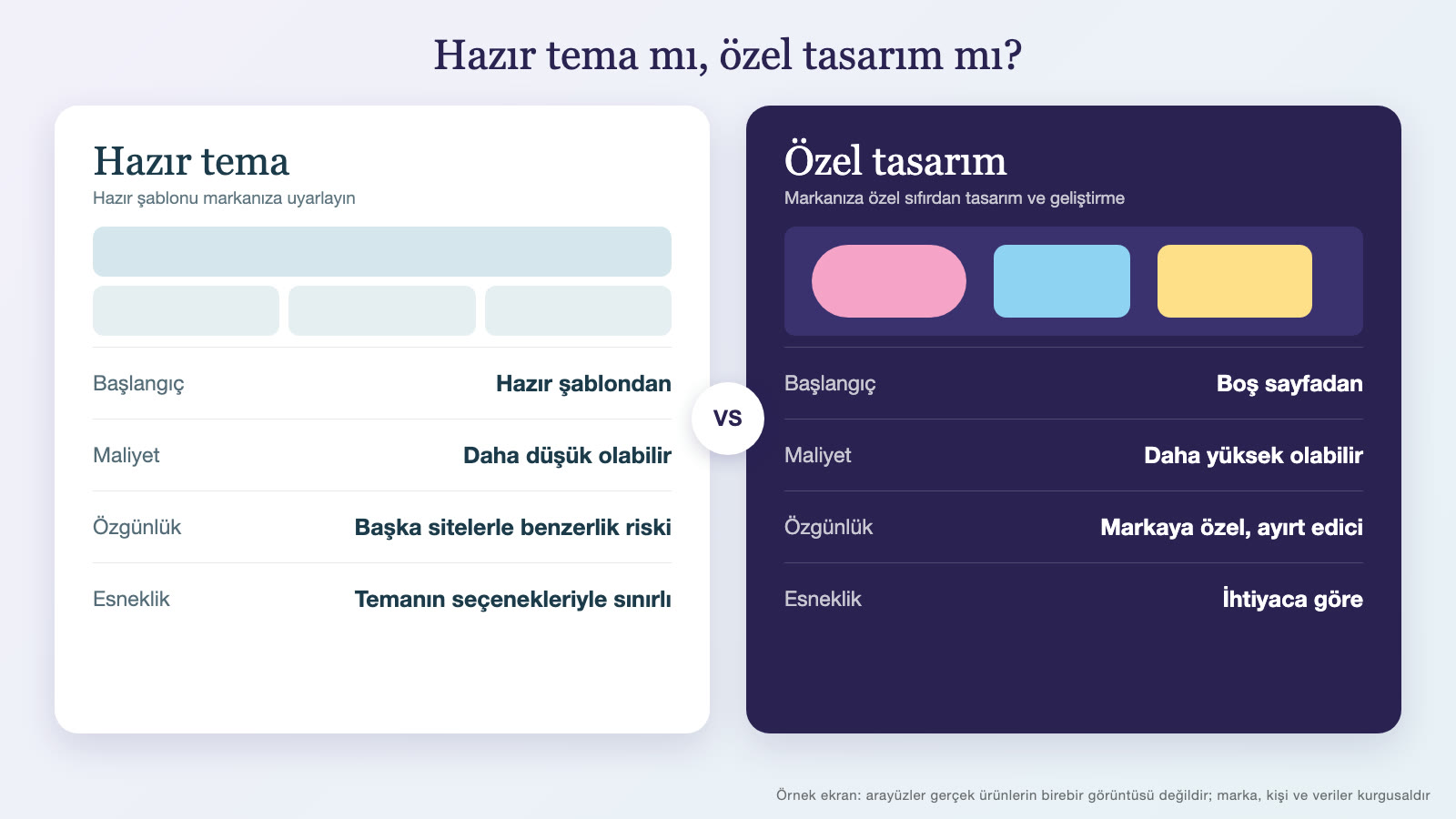
| Feature | Ready-made theme (template) | Custom Design |
|---|---|---|
| Cost | Can be lower | Can be higher; requires design and development effort |
| Timeline | The process of adapting the theme to the brand | The design and coding process; these stages can extend the timeline |
| Originality | Risk of looking like other sites | Unique to the brand, distinctive |
| Flexibility | Limited to the options the theme offers | Unlimited, as needed |
| Performance | May include unnecessary code and features | Can be lighter, with only as much code as needed |
| Maintenance | Theme updates and compatibility tracking | Maintenance of custom code; dependence on the developer |
| When it fits | Small businesses, a first site, projects with limited budgets | Strong brand experience, custom features, competitive industries |
There is also a middle path between these two extremes: A design heavily adapted to the brand on top of a ready-made foundation. It can be a balanced solution depending on budget and need. Ready-made foundations are widely used: WordPress is used by 58.2% of sites with a known content management system and 39.5% of all sites (W3Techs, November 1, 2026). Whichever option you choose, a design that fits the brand’s identity and needs comes before price.
Cost drivers by site type
- Brochure site: A few pages and a contact form; the simplest type.
- Corporate site: More pages, service and client sections, a blog; content and design effort go up (our corporate website guide).
- Landing page: A single page focused on high conversion; small, but intensive in strategy and copy quality (our landing page guide).
- E-commerce site: Products, payments, shipping, inventory and legal requirements; may need many features and integrations.
- Portal and platform: Membership, multi-user structure, custom business logic; heavy on software development.
- Mobile app: A separate product from the website that needs a separate budget (our mobile app guide).
Annual costs beyond the design fee
Costs continue after the site is published. When calculating the total cost of ownership, don’t forget these items:
- Domain renewal: Learn the renewal period and fee from the provider.
- Hosting: Server space; it can rise as traffic and needs grow.
- SSL and security services: A secure connection and extra protection; ask whether they are paid. Note: Let’s Encrypt states that it gives a trusted certificate free of charge to anyone who owns a domain name (Let's Encrypt); so you can ask in the quote whether a separate fee is charged for basic SSL alone.
- Maintenance and updates: System, theme and plugin updates, security patches, backups.
- License and plugin fees: Some themes and plugins require annual renewal.
- Technical support: A support package for bug fixes and small changes.
- Content updates: New pages, blog posts, photos and campaign content.
- Marketing and SEO: Ongoing work to make the site visible.
- Corporate email service.
Ask about these costs up front and have them written into the quote; comparisons made without knowing the annual cost are misleading.
How to compare quotes
Getting quotes from three different agencies or individuals is a good way to understand the market. However, quotes cannot be compared unless they have the same scope. To make the comparison easier, give them all the same written brief and ask for answers under these headings:
| Comparison heading | What you should ask |
|---|---|
| Scope | How many pages, which page types and which features are included? |
| Design | Ready-made theme or custom design; how many design proposals and revisions? |
| Content | Who has the text, photos and video? Included or extra? |
| Technical | Are mobile compatibility, speed, security, backups and SEO basics included? |
| Ownership | Who owns the domain, hosting, design files and code? |
| Timeline | What are the delivery schedule and stages? |
| Training and support | Is there admin panel training, a guide and post-launch support? |
| Maintenance | What is the additional maintenance package, its price and its scope? |
| Payment plan | How much payment is requested at which stage? |
| References | Can similar projects and client references be shown? |
Treat price as just one criterion. The quality of the work, communication, reliability of delivery and post-launch support determine the total cost in the long run.
The hidden costs of very low prices
Very low-priced quotes can look attractive, but you need to check what is included. Situations to watch for:
- Scope left out: Content, mobile compatibility, SEO, security, backups or training are not included in the price and are requested later for an extra fee.
- Generic ready-made design: No brand-specific work is done; the site looks similar to competitors.
- Poor code and infrastructure: Slow, vulnerable or hard-to-update setups.
- Ownership problem: The domain, hosting or site may belong to the company; you run into trouble when you want to leave.
- Mandatory long-term binding packages: Very long contracts under the name of usage or maintenance.
- Lack of support: A company or freelancer who cannot be reached after launch.
- Copyright and license risk: Using an unlicensed theme, image or font can cause legal trouble later.
This does not mean low-priced services are bad, but you should decide knowing what is missing. For some businesses, a simple and affordable start is the right and sufficient choice. What matters is that the scope of the quote matches your need.
Freelancer or agency?
- Freelancer: Can offer flexibility and direct communication. Being one person, they may not have the same depth in every field (design, development, SEO, content); consider the risk around continuity and backup.
- Studio or agency: Can bring different areas of expertise together; the process, project management and support structure may be stronger. It can be a safer option for large and complex work.
Look at the difference between “freelance web design prices” and “agency prices” not just as a difference in hourly rate, but as a difference in process, assurance and support. When choosing an agency, you can draw on the criteria in our agency guide.
Website builders and AI-assisted solutions
For small businesses with limited budgets, website builders and AI-assisted tools can offer a fast and affordable start. They may charge a monthly or annual subscription fee and aim to let you build a site without technical knowledge. The limits of these solutions should also be known: Customization and scalability are limited, the design may look like other sites, SEO and speed settings may be limited, and the cost continues as long as the subscription does. Content and design produced with AI, in turn, need human review for accuracy, originality and brand fit (AI content production). These tools may be enough for a small start; when brand value, sales and long-term growth are the goal, moving to a professional setup may be necessary.
Payment plan and contract
Once the price is settled, the payment and contract arrangements also matter.
Payment stages
On project-based sites, payment can be split into stages: An advance at the start, a portion at design approval, a portion when development is complete and the remainder after launch. This structure can help protect both the client and the provider. Paying everything up front can weaken your assurance of delivery.
What a contract should include
- Scope and deliverables: Pages, features, content and files.
- Timeline and stages: Delivery dates and delay terms.
- Number of revisions: How many rounds of corrections are included; the fee for later changes.
- Price and payment plan.
- Ownership and rights: The design, code, content, domain and accounts belonging to the business; third-party licenses.
- Confidentiality: Protection of shared information.
- Maintenance and support: The duration and scope of post-launch support.
- Termination and refund terms.
- Legal obligations: Who is responsible for texts such as KVKK (Turkish Personal Data Protection Law) and cookies.
How to manage cost without sacrificing quality
- Clarify the need: Separate what the site “must have” from what would be “nice to have”; start with the essentials in the first version.
- Prepare the content in advance: Having the text, photos and references ready from the start cuts both time and cost.
- Grow in stages: Launch the basic site in the first phase; leave additions like a blog, e-commerce and multilingual support for later phases.
- Set a clear brief and a single point of contact: Many revisions and unclear expectations raise cost.
- Choose a reliable and sustainable foundation: Easy-to-maintain, widespread and supported technologies can save money in the long run.
- Have the site built so you can update it yourself: You avoid paying every time for small updates.
- Plan the annual cost: Include maintenance, hosting and marketing costs in the budget.
How can quotes be calculated? Three possible methods
Knowing the calculation method behind a quote helps you understand and compare the price. Quotes can generally be prepared with one of these approaches:
- Fixed price per project: The scope is defined in writing and a single total price is given. The budget becomes predictable; but every request outside the scope brings an extra fee. Suitable for projects with a clear scope that will not change.
- Hourly or daily rate: Billing is based on time spent. It offers flexibility for work with an unclear or evolving scope; but it is hard to know the total cost in advance. In this model, it helps to set an estimated duration and an upper limit.
- Package price: Fixed packages are offered for a predefined scope and page count (such as starter, standard, advanced). Easy to compare and understand; but check whether the package fits your needs exactly.
Whichever method is chosen, clarify with questions which items make up the price. A quote that can be explained item by item inspires trust and can be compared.
Common situations that lead to extra fees
In projects, the gap between the starting price and the final cost can come from scope creep. The situations below can lead to extra fees; make clear in the contract which of them are included:
- Exceeding the agreed number of revisions or changing an approved design from scratch.
- Adding a new page, section or feature that was not discussed at the start.
- Work running longer because content was delivered late or incomplete.
- Bulk import of a large number of products or content items into the system.
- Migrating data from the old site and redirecting addresses.
- Additional languages, additional integrations or custom reporting needs.
- Additional training, support and small change requests after launch.
It may be hard to prevent these situations entirely, but a clear brief, staged approvals and a short written process for change requests limit the extra cost. Quoting new out-of-scope requests as separate work, outside the current project, protects both the client and the provider.
How should you think about the return on a site?
A website is an investment as much as an expense. A simple calculation can help you assess the return: Think about the result the site is meant to achieve (for example, a certain number of quote requests or orders per month) and the average value of a customer. Do your own math by comparing the cost of the site with the number of target results multiplied by the average customer value. Conversely, a site that brings in no customers, builds no trust or cannot be found is money wasted, however cheap it was. So weigh the price decision together with the question “what can this investment bring me, and under what conditions?” rather than “how much will I pay?”. Marketing work such as SEO, advertising and content should be planned separately for the site to bring in customers (our digital marketing guide).
Can you negotiate on price?
Providers may be flexible on scope and payment terms, but thinking of negotiation only as “ask for a discount” can end with the scope quietly shrinking. A more productive approach is this: Share your budget openly and ask what can be done within it; focus on the must-haves in the first phase and propose leaving extra features for later; offer to cut cost by preparing the content yourself; discuss the possibility of a long-term maintenance or marketing partnership. Approaching it with realistic expectations and respect for the provider’s work matters for a healthy working relationship.
Common mistakes
- Looking only at price: Not comparing scope, experience and support.
- Asking for a price without a brief: Asking “how much?” with no clear description and failing to get a meaningful quote.
- Not asking about hidden costs: Overlooking hosting, maintenance, license and content costs.
- Not clarifying ownership: The domain and admin access not being in the business’s name.
- Neglecting content preparation: A longer project and extra cost.
- Working without a contract.
- Paying the entire amount up front.
- Constantly adding scope: New requests keep piling onto the work defined at the start.
- Not planning for after launch: Not setting aside a maintenance and marketing budget.
- Not tying price to results: Investing without calculating how many leads the site needs to bring in.
Sample scenario: Three different quotes
An architecture office is getting three different quotes for a new corporate website. The brief is the same: Home page, about, six service pages, project gallery, blog, contact; mobile compatibility; Turkish and English.
Quote A: A very low total price. A ready-made theme will be used; content and photos are expected from the client; English pages will be added with automatic translation; SEO, backups and training are not included; the domain and hosting will be opened in the company’s account.
Quote B: A mid-range price. Includes a design adapted to the brand, mobile compatibility, basic SEO, analytics setup, admin panel training and two revision rounds; the English text will be prepared by the client and the company will only place it; domain and hosting in the client’s name; the annual maintenance package is priced separately.
Quote C: A high price. Includes a strategy study, custom design, professional project photography, copywriting and translation, advanced SEO, speed optimization, three revision rounds and one year of maintenance.
Assessment: The office fills in the scope table and compares the quotes. It sees that Quote A’s price covers only a small part of the requested scope, that ownership stays with the company, and that the real cost will climb with extra items. It notices that Quote C offers a strong scope but exceeds the budget. It chooses Quote B; it prepares the photo and text content itself, leaves professional project photography for a second phase, and makes domain ownership and maintenance terms clear in the contract.
In this scenario, the right decision is not to pick the cheapest or the most expensive quote, but to match scope to need and assess the long-term total cost.
Website project checklist
- Have the site’s goal, target audience and required pages been written down?
- Has a written brief been prepared and given to at least three companies?
- Were the quotes compared using a scope table?
- Was the choice between a ready-made theme and custom design made deliberately?
- Is it clear who is responsible for the content (text, photos, video)?
- Are SEO basics, mobile compatibility, speed and security included in the price?
- Are the domain, hosting and admin access in the business’s name?
- Have the annual costs (hosting, maintenance, licenses) been learned?
- Is the payment plan split into stages and written into the contract?
- Are the number of revisions, the delivery schedule and the support period clear?
- Has a post-launch maintenance and marketing budget been set aside?
If you would like to clarify the scope for your project together and get a transparent quote, take a look at our web and software services.
Mini glossary: Web design cost terms
- Scope: The complete list of work included in the project.
- Ready-made theme (template): A pre-built site design adapted to the brand.
- Custom design: A design created from scratch, specifically for the brand.
- Revision: A round of requested corrections on delivered work.
- Total cost of ownership: The sum of setup and annual running costs.
- Maintenance package: A regular service covering updates, security, backups and support.
- Integration: Connecting the site to other systems such as payments, accounting or a CRM.
- CMS: Content management system.
- Wireframe: A content-free sketch of the page layout.
Frequently asked questions
What determines web design prices?
Prices are determined by the number of pages and the content, the type of design (ready-made theme or custom), features and integrations (e-commerce, membership, appointments), content and visual production, SEO, multilingual support, the team’s experience, the timeline and post-launch maintenance costs.
How much does it cost to have a website built?
There is no single price; a simple brochure site and an e-commerce site or portal are worlds apart. Prepare a written brief for your own project, collect a few quotes and compare them by scope.
What is the difference between a ready-made theme and a custom design?
A ready-made theme can be faster and more affordable, but it may look similar to other sites and its flexibility is limited. A custom design is unique to your brand and flexible, but it can take longer and cost more.
What is the annual cost of a website?
Annual costs include domain renewal, hosting, security and SSL, maintenance and updates, license renewals, technical support and content updates. Ask about these up front and include them when comparing quotes.
Are very cheap website quotes reliable?
The scope may be narrow; content, mobile compatibility, SEO, security and support may not be included, or ownership may stay with the company. A low price is not automatically bad, but you need to find out in writing what is included and what is missing.
Should I choose a freelancer or an agency?
Freelancers can offer flexibility and direct communication; agencies offer a range of expertise, process discipline and continuity. Decide based on the size and complexity of the project and your need for support, and in either case make the contract and ownership terms clear.
Conclusion
Web design prices are determined by the scope of the site, the design approach, its features, its content, the team’s experience and post-launch costs. The way to get a sound answer to “how much?” is to first clarify the goal and the need, collect a few quotes against a written brief, and compare them in the same scope table. Looking beyond the lowest price to the total cost of ownership, scope, ownership and quality of support leads your business to the right decision on both budget and results. We recommend seeing a website not as an expense but as an investment that is measured and improved.
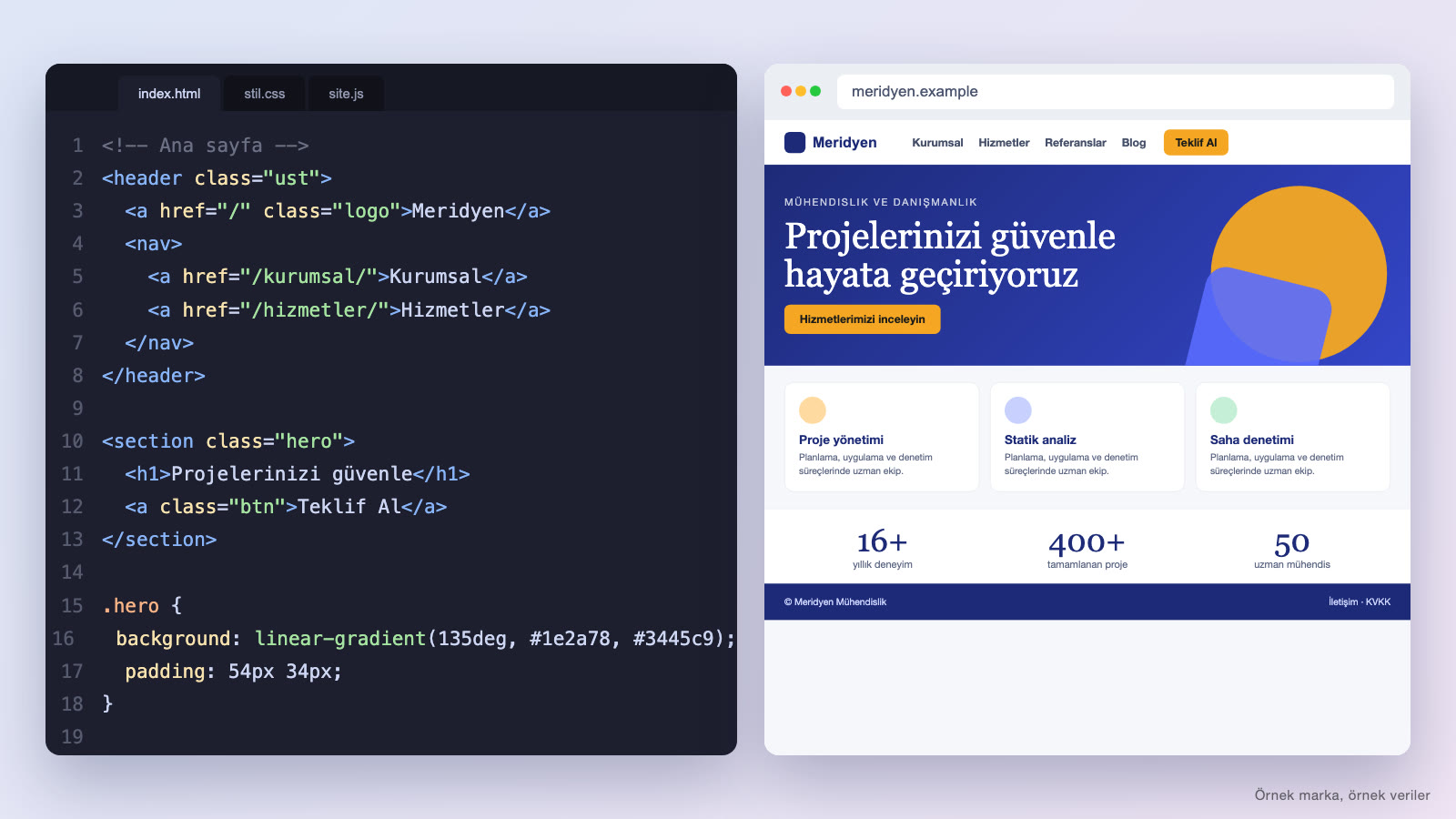
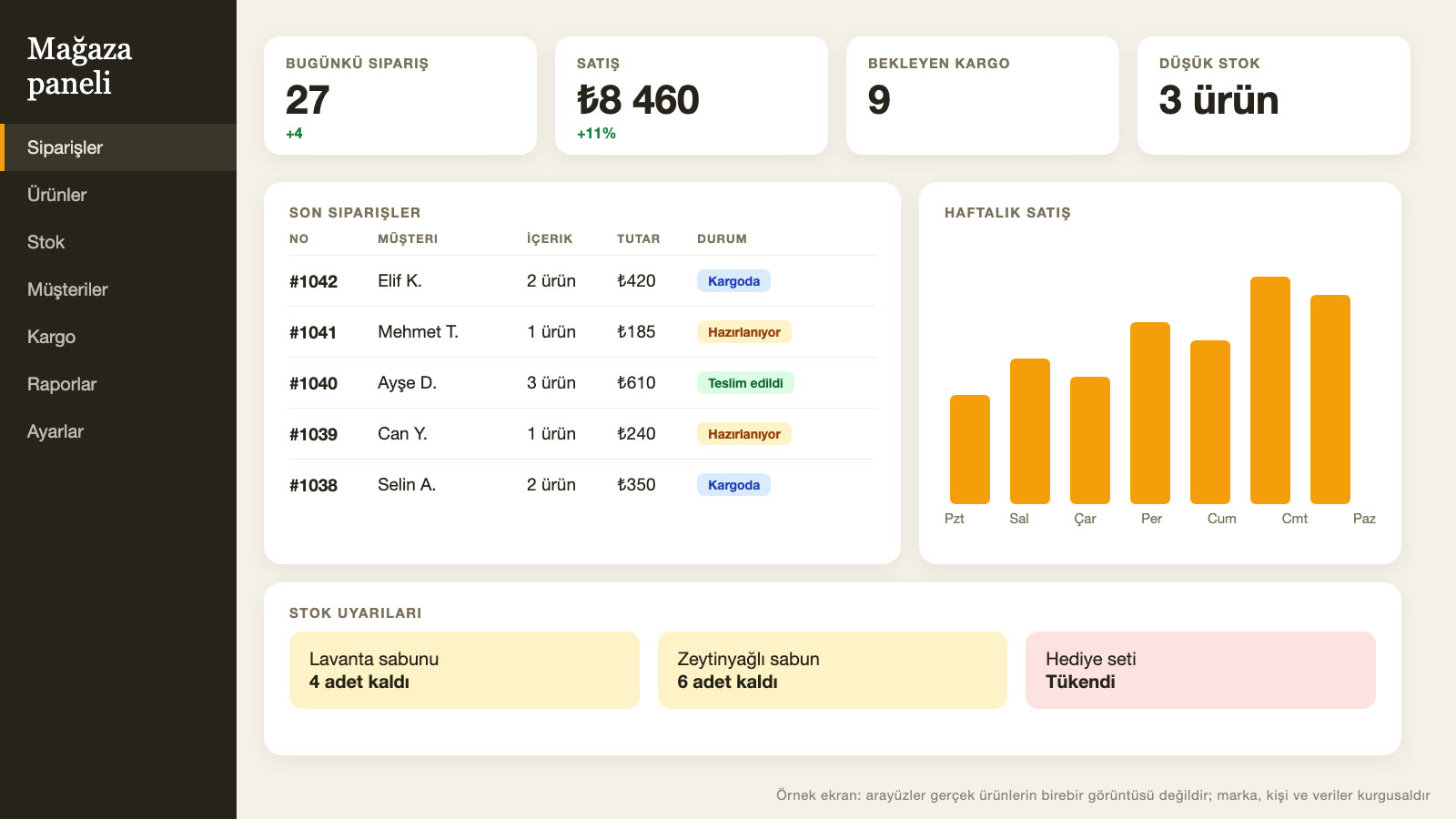
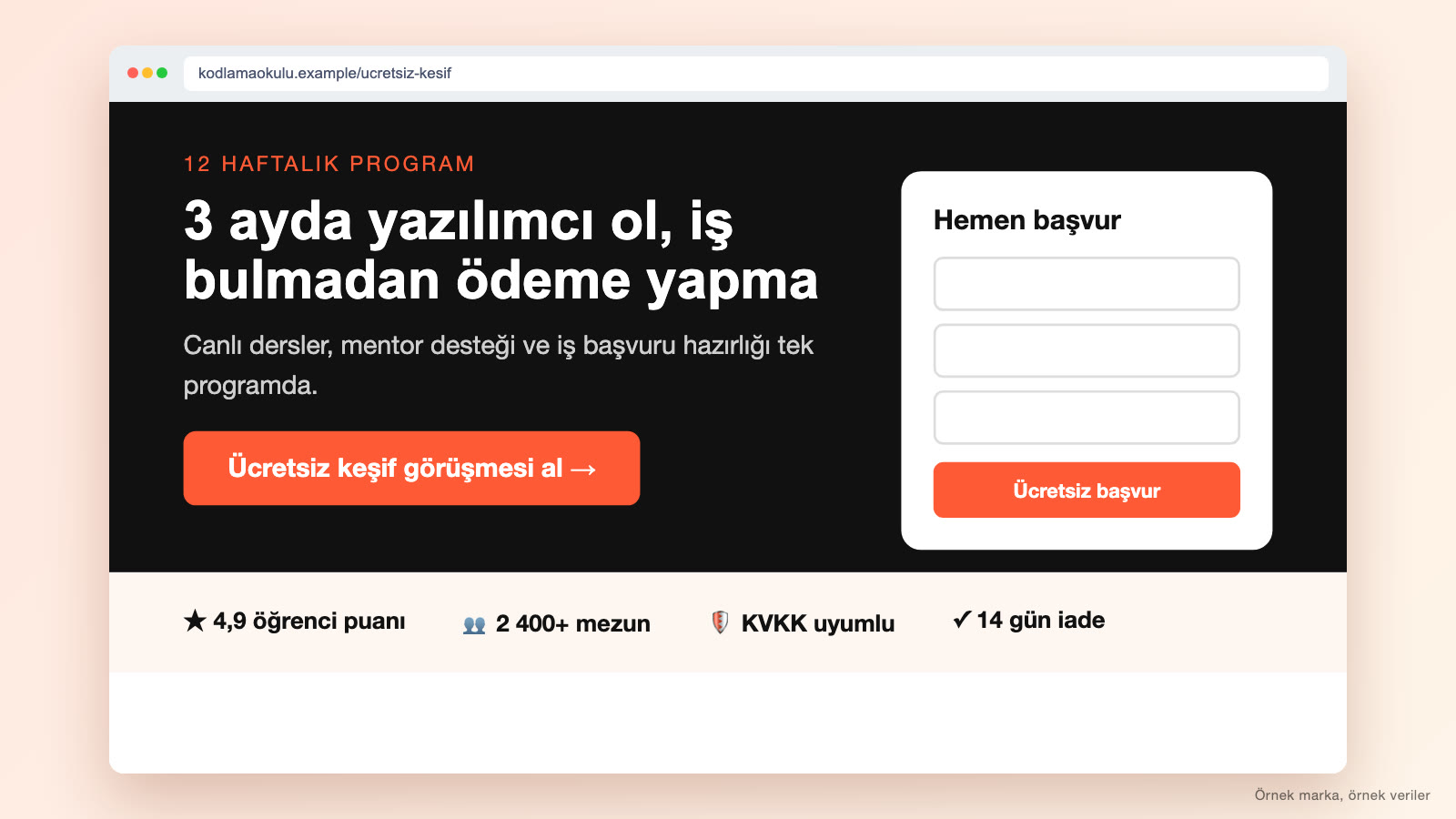
This article was prepared with AI support. The images in the article are sample screens drawn with code; they don’t show a real client, person, place or data.
Related work
A few examples of Media Fish’s work on this topic:


Corporate Website + SEO
Design · Software · Publishing

E-Commerce Site + SEO + GEO
Design · Software · Publishing

E-Commerce Site + SEO + SEM
Design · Software · Publishing
Software Engineer, Media Fish. Writes on our blog about web and software, mobile apps, artificial intelligence and search engine optimization (SEO).