How to Create Content With AI: A Guide to Efficient, Accurate and Ethical Use
AI can be used in content production; Google's guidance asks for the output to be checked by hand before publishing. A practical guide covering tools, prompt writing, workflow, SEO, copyright and ethics.
 Melis Ay ÜreğenSoftware Engineer17 min read
In Brief
Creating content with AI means preparing or supporting content such as ideas, drafts, text, images, video and audio with AI tools. Google’s guidance considers manual checking of AI output for accuracy and reliability before publishing critical; it is also recommended to review outputs for brand voice and legal compliance. Pay attention to labeling rules, copyright and privacy.
- Google’s guidance says generative AI can be useful for topic research and for adding structure to original content; it asks for the output to be manually verified before publishing.
- We recommend writing prompts with clear context, target audience, format and examples, and improving the output with follow-up instructions (Media Fish’s working recommendation).
- You need to be prepared in advance for risks such as sharing confidential information, copyright, misleading content and platform labeling rules.
Table of Contents
With AI tools you can produce a blog post draft, a product description, social media copy, an image, a short video or a voiceover. But producing is not the same as being accurate and ready to publish: Google Search Central’s guidance on generative AI content states that generative AI output can contain incorrect information. Beyond that, failing to match the brand voice and copyright or ethical problems also need attention.
In this article, we cover creating content with AI in a practical framework: what can be done, what kinds of tools exist, writing prompts, a step-by-step workflow, the importance of human review, SEO and AI content, copyright and ethics, data privacy, platform labeling rules, ways to protect brand voice, common mistakes and a sample scenario. Since technology and regulations can change, check the current state of tools and legislation separately. Information in this article that has a source is linked; lists, workflow steps and tips without a link are Media Fish’s general working recommendations, not sourced facts or measurements.
What is content creation with AI?
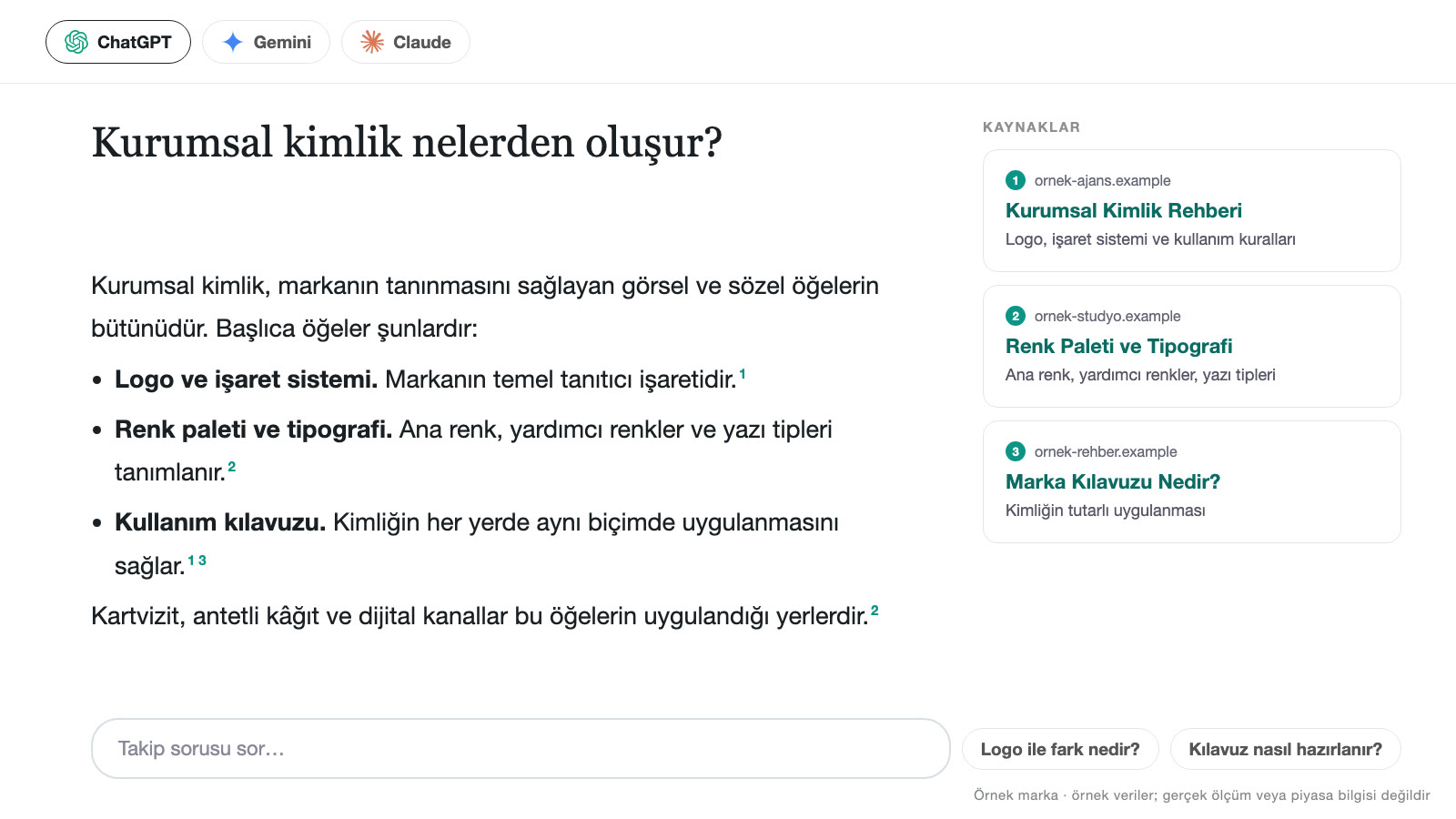
Creating content with AI means AI systems such as large language models, image and video generation models and speech synthesis producing text, images, video, audio or other content according to the user’s instructions. According to Google’s guidance, generative models don’t retrieve facts; they predict a likely sequence of words based on training data. With these tools, you can try writing a blog draft, listing product features, creating an image or translating text into another language.
The same guidance therefore states that generative AI output can contain inaccuracies (sometimes called “hallucinations”) and that manually verifying and reviewing it before publishing is critical (source). In this article, AI is treated as a helper; verification is left to people. For a general definition of AI and its uses, see our AI guide.
What can you create with AI?
The list below is a general overview of the uses you can try with these tools; check how well a tool does them through your own testing and the tool’s documentation.
- Text: Blog and article drafts, product and service descriptions, social media copy, email, ad copy, headline alternatives, summaries and translations.
- Idea and strategy support: Content calendar ideas, topic suggestions, questions and Q&A drafts, summaries of competitor content.
- Images: Illustrations, concept visuals, social media images, product scenes; editing and extending existing images.
- Video and animation: Short video, animation, motion graphics and support with video editing (our guide to AI image and video production).
- Audio and music: Voiceover, audio cleanup, subtitles and transcripts, music drafts.
- Code and spreadsheets: Simple code snippets, formulas, data cleanup.
- Analysis and summaries: Summarizing long documents, reports or customer reviews and grouping them into themes.
Benefits and risks
Expected benefits
Google’s guidance says generative AI can be useful for topic research and for adding structure to original content. The following, however, are not measured results but the intended uses expected from these tools; whether they deliver is something you need to measure in your own work:
- Speed: Shortening the time it takes to prepare a draft.
- Scalability: Making it easier to prepare many product descriptions or content variations (each must be checked manually).
- Variety of ideas: Seeing different angles and alternatives.
- Time savings: On repetitive, low-risk tasks.
- Writing, translation and summarization support.
Risks
- Wrong information (hallucination): Google’s guidance notes that generative AI output can contain inaccuracies; verify every piece of information against its source to guard against the risk of made-up sources and figures.
- Generic, unoriginal content: You need to add the brand’s own perspective.
- Loss of brand voice: Inconsistent or impersonal language.
- Copyright and rights issues: The legal status of the generated content (see the copyright section below).
- Data privacy: Uploading confidential or personal information to the tools.
- Misleading content and reputation risk: Fake images, audio and video that look real.
- Over-reliance: Leaving verification and decision-making to the tool.
- Running into search policies: According to Google’s guidance, producing large numbers of pages without adding value for users can violate the “scaled content abuse” spam policy.
How do you write a good prompt?
The instruction given to AI tools is called a “prompt.” A vague prompt such as “Write me a blog post” doesn’t tell the model what to write or how. The elements below are a prompt framework recommended by Media Fish (it is not a sourced standard):
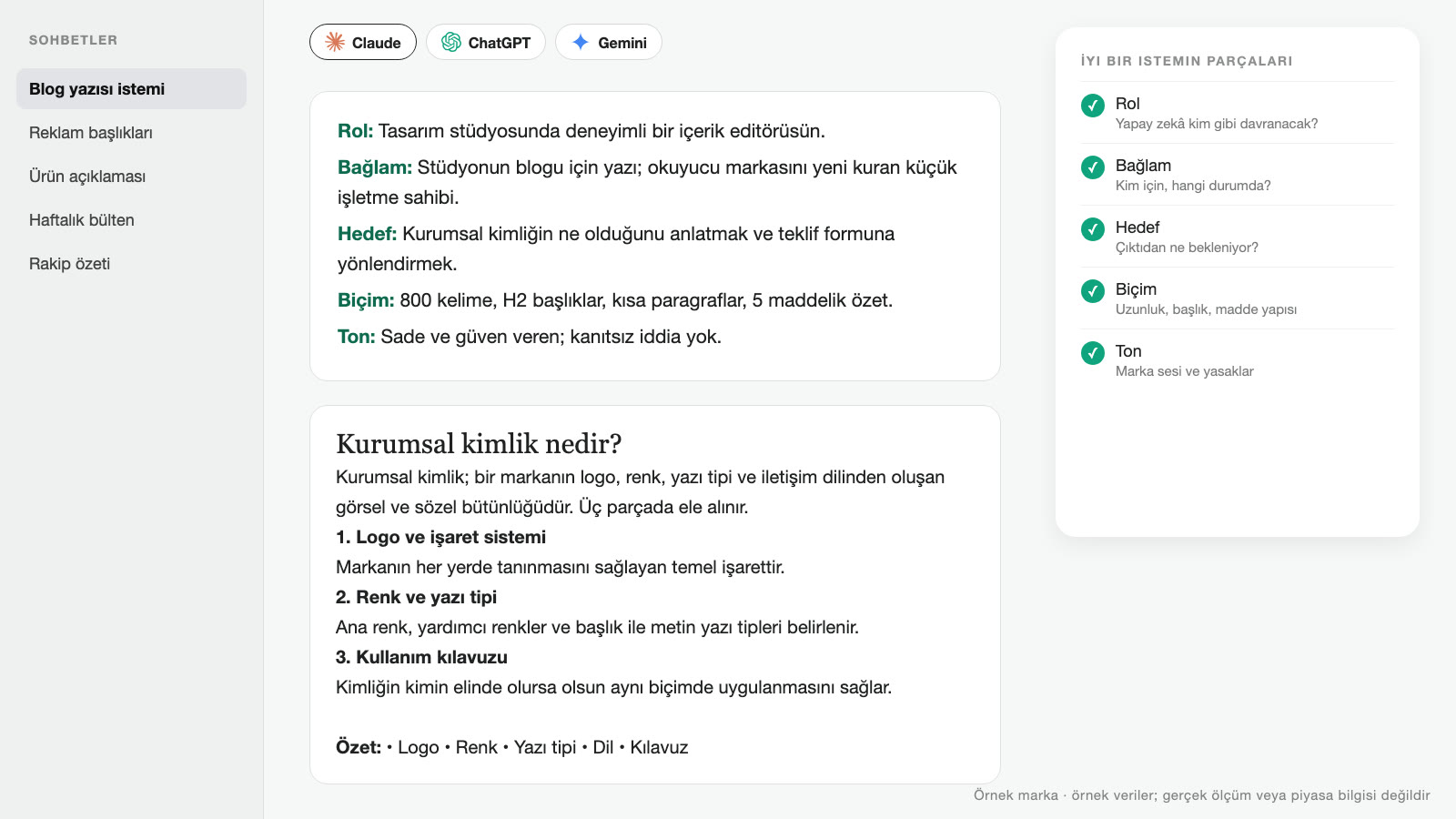
- Role: The perspective from which the tool will respond. For example, “Write like an experienced interior design marketing specialist.”
- Context: Brief information about the business, product, industry and situation.
- Target audience: Who it is written for: knowledge level, needs, language.
- Task: Exactly what is being asked: a draft, a summary, headline alternatives, a rewrite.
- Format and length: Heading structure, bullet points, number of paragraphs, approximate word count.
- Tone and style: Friendly, formal, reassuring, humorous; expressions to avoid.
- Constraints: Words not to use, topics not to mention, legal warnings.
- Example: A text you like or a sample of the brand voice.
- Source and data: The accurate information you want used (product features, figures). Provide the source yourself to keep the tool from making things up.
Sample prompt skeleton (fictional)
“You are the content editor of a handmade ceramics brand. Target audience: women aged 25–45 interested in home decor. Using the product information below (product name, material, size, care), write an Instagram post of 80–100 words. Tone: warm, friendly, no exaggeration. End with a question. Words I don’t want used: ‘perfect’, ‘unique’. Don’t add any information beyond what is below.”
This prompt is a fictional example of what writing out in detail what you want can look like. If you don’t like the first output, you can fix it step by step with instructions such as “make it shorter,” “be more formal,” “add this information,” “change this sentence.”
AI-assisted content workflow
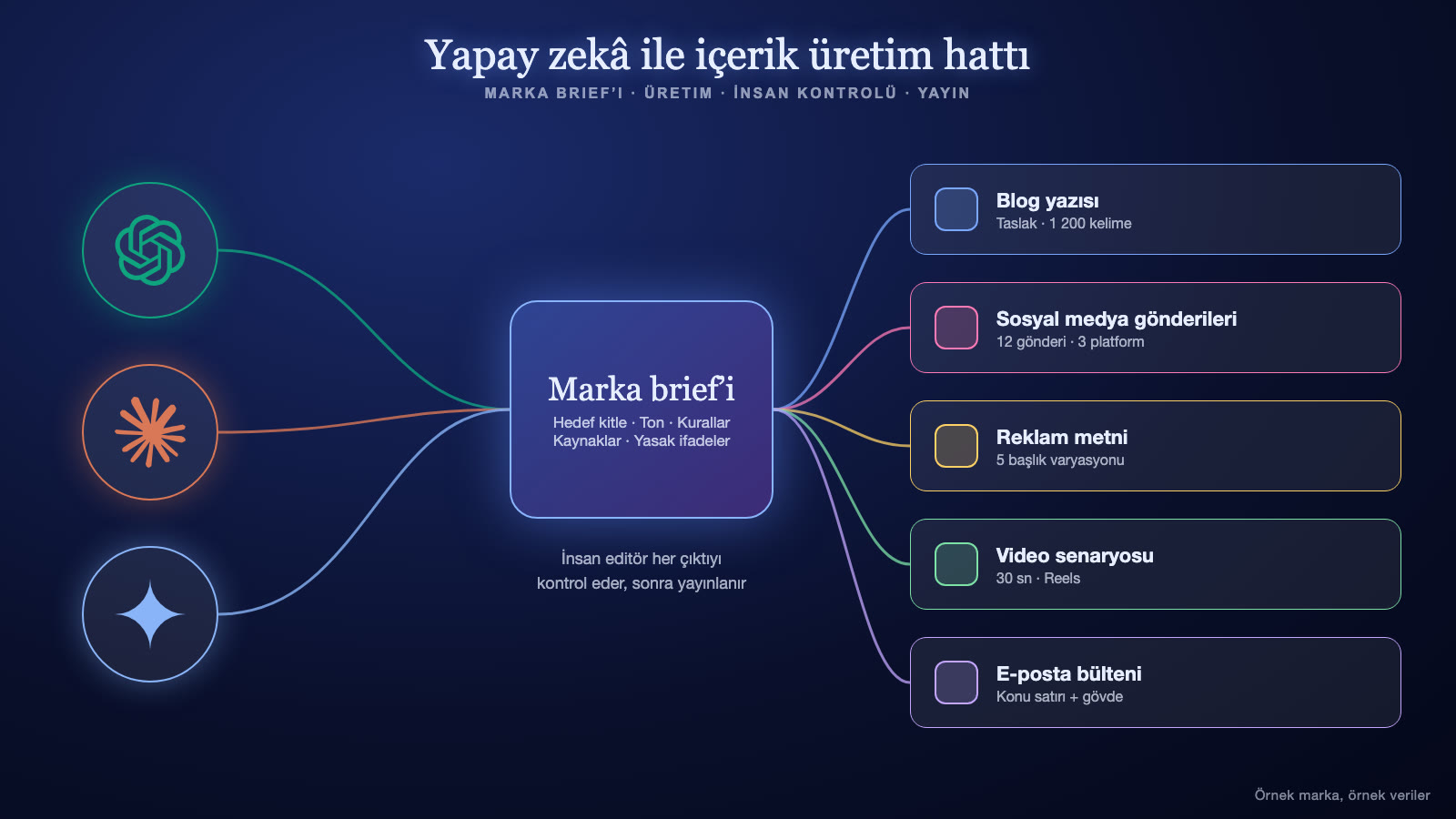
The nine steps below are a workflow we recommend for separating the tool’s work from human review (it is not a sourced standard):
- Goal and strategy: The content’s purpose, target audience and main message are defined by a person. Our marketing strategy guide can help with strategy.
- Research and source gathering: Gather accurate information from reliable sources; don’t blindly trust what the tool “knows.”
- Outline and draft: Ask the tool for a heading structure, section suggestions and a first draft.
- Human editing: Enrich the draft with real information, experience, examples and brand voice; correct the errors.
- Verification: Check figures, dates, names, quotes and claims against the source.
- Language and spelling check: Review grammar and spelling errors.
- Visuals and format: Add suitable visuals and layout.
- Legal and ethical check: Check copyright, advertising rules, personal data and labeling requirements.
- Publishing and measurement: Publish the content and monitor its performance; carry what you learn into your next prompts and the process.
Why human review is indispensable
Google’s guidance describes manually checking all AI-generated content for accuracy and reliability before publishing as “critical”; this check also applies to the title, meta description, structured data and image alt text (source). As Media Fish, we add the following reasons (as recommendations):
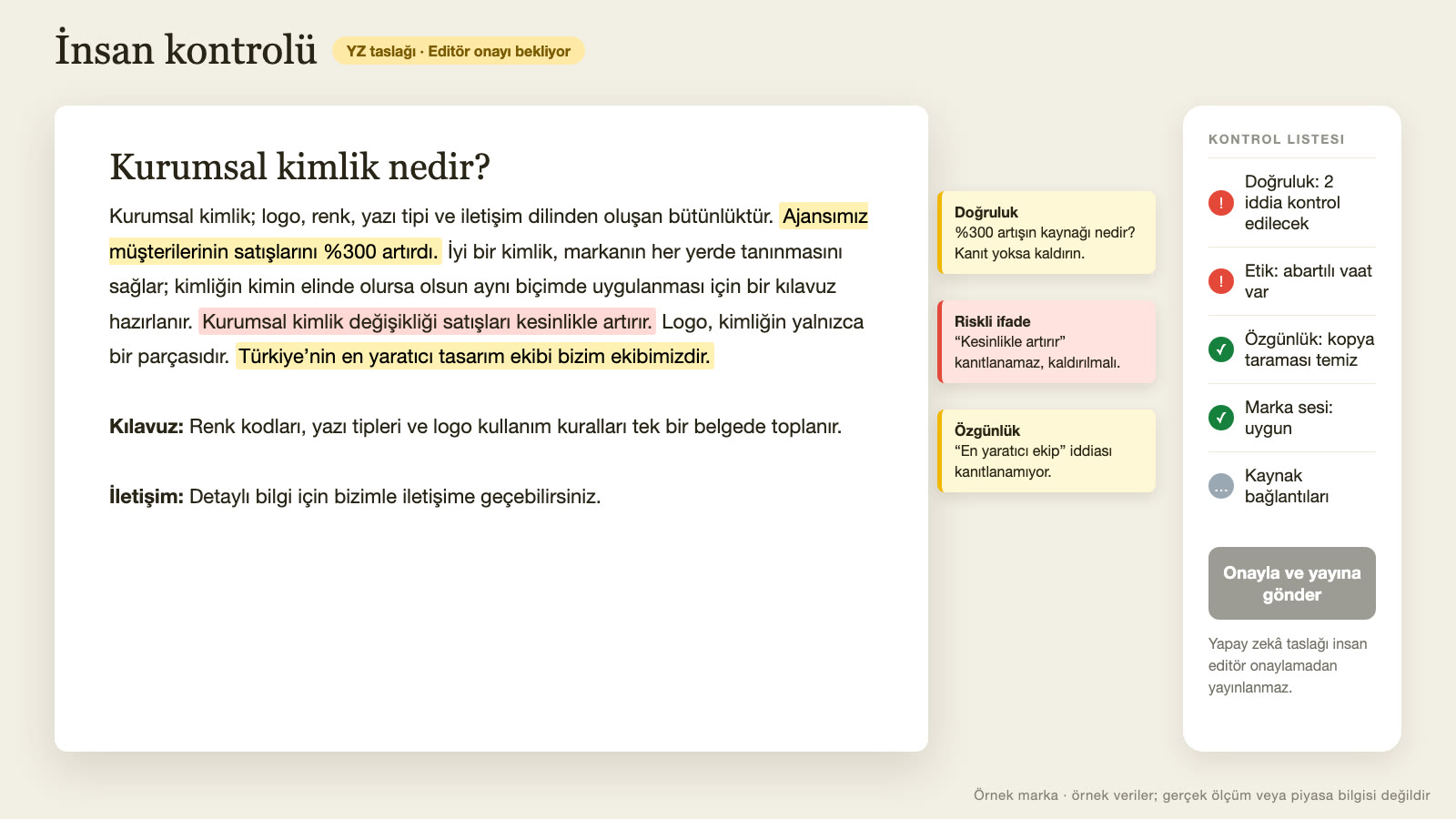
- Accuracy: We recommend verifying more rigorously on topics where the consequences of an error can be serious (law, health, finance, technical).
- Originality and value: We recommend that you add the real experience, examples, data and perspective yourself.
- Brand voice: Human editing is recommended for consistency.
- Context and sensitivity: We recommend having a person read for cultural, social and timing-related sensitivities.
- Responsibility: As the party publishing the content, we recommend having your own approval process before publishing.
Quick check questions
- Has every figure, date, name and claim been verified against a source?
- Are there any made-up sources, quotes or links?
- Does the content have original value that belongs to our brand or our experience?
- Do the tone and language match our brand’s voice?
- Are there sections copied from elsewhere or very similar to other content?
- Is there anything that could be a legal or ethical problem?
AI content and SEO
To the question “Does content written with AI rank on Google?”, the guidance Google has published answers without promising rankings: according to the guidance, generative AI can be useful for topic research and for adding structure to original content; however, producing large numbers of pages with AI tools without adding value for users can violate Google’s “scaled content abuse” spam policy. The same guidance states that AI output should be manually reviewed for accuracy and reliability before publishing, and that this check also applies to areas that can appear in search results such as the title, meta description, structured data and image alt text. Media Fish’s practical recommendations drawn from this guidance:
- Don’t mass-produce unoriginal content: Producing large numbers of pages without adding value for users can be evaluated under Google’s spam policy.
- Add real expertise and experience: We recommend adding examples, data, photos and personal observations.
- Take care with accuracy: Google’s guidance asks for the output to be manually verified before publishing.
- Meet user intent: Build the content around the user’s question, not around a keyword.
- Use a clear structure: Clear headings, short summaries, frequently asked questions and tables make it easier for readers to scan the content (recommendation). For AI-powered search, Google’s documentation says there is no additional requirement; for details, see our GEO guide.
For the basic principles of SEO, you can read our SEO guide.
Copyright, ethics and transparency
- Copyright: In Türkiye, Law No. 5846 on Intellectual and Artistic Works defines a work as a product that “bears the characteristics of its author” (Article 1/B), identifies the author as the person who creates the work (Article 8), and sets the term of protection as the author’s lifetime plus 70 years after death (Article 27). How these provisions apply to AI output is not interpreted in this article; it is a matter for a separate legal assessment. Don’t assume that generated content is entirely your property; read the tool’s terms of use and check the commercial usage rights. Get legal support for important work.
- Other people’s works: We recommend getting legal support before using outputs that copy or exactly imitate the work of an existing artist or brand.
- Real people: We recommend not imitating real people’s faces, voices and images without permission. The ban on advertising that uses an AI-generated digital copy of a real person is in the Legal note box below; get legal support for other cases.
- Transparency: Platform rules differ; for example, YouTube requires realistic-looking AI-generated or altered content to be disclosed at upload, while AI help with scripts, titles and thumbnails is among the examples that do not require disclosure. According to YouTube, creators who consistently choose not to disclose may face penalties such as content removal or suspension from the YouTube Partner Program. Check the rules of other platforms in their own documentation. Google’s guidance also notes that providing information about how content was created can give readers context; we recommend avoiding the production of realistic fake content and, where needed, stating that the content was prepared with AI support.
- Bias and inclusivity: We recommend reviewing the content for discriminatory, stereotyped or exclusionary expressions.
- Advertising and consumer rules: Commercial advertising rules should also be considered for ad copy produced with AI. The second paragraph of Article 61 of Consumer Protection Law No. 6502 requires commercial ads to be accurate and honest and to comply with the principles set by the Advertising Board, general morality, public order and personal rights; its third paragraph states that commercial ads that deceive consumers cannot be run.
The Regulation Amending the Commercial Advertising and Unfair Commercial Practices Regulation, published in issue 33297 of the Resmî Gazete (Official Gazette of Türkiye) dated July 1, 2026, took effect on August 1, 2026. Two of its provisions concern advertisements prepared with AI. The first (paragraph 8 added to Article 18 by Article 6 of the amending regulation): where AI or other software is used in advertisements in a way that significantly affects consumers’ economic behavior regarding a good or service, or where digital characters indistinguishable from humans created with AI technologies appear, this must be stated clearly, understandably and distinguishably. The second (paragraph 12 added to Article 27 by Article 11): advertisements cannot be made in which a digital replica of a real person, created with AI technologies, falsely gives the impression of having personally experienced or used a good or service, or makes a recommendation. For the exact text, see the Resmî Gazete page in the link.
Data privacy and security
How the information you type or upload into AI tools is stored and processed is written in each tool’s own terms of service and privacy document; read them before use. The following are Media Fish’s general recommendations:
- Before uploading customer data, personal information, trade secrets, contract texts, passwords and confidential documents to the tools, check the tool’s data policy; if in doubt, don’t upload.
- For business use, find out from the contract whether the tool uses data for training and what security guarantees it provides.
- Prepare a short usage policy that defines which tools can be used within the company, for what purpose and with what data.
- Comply with personal data protection legislation; get legal support if necessary. In its document Guide to Generative AI and the Protection of Personal Data (in 15 Questions), published on November 24, 2025, the Personal Data Protection Authority (KVKK) states that it evaluates personal data processing in these systems within the framework of Law No. 6698.
- Verify the links and downloads in the output before opening them.
Protecting your brand voice
AI output may not carry your brand’s voice. Media Fish’s recommendations for protecting your brand voice:
- Prepare a brand voice guide: Tone, phrases to use and avoid, sample sentences and writing rules; add them to your prompts.
- Give good examples: Show the brand’s best texts as examples.
- Add a personal touch: Real customer stories, team anecdotes and local details.
- A regular editor’s eye: Have one person edit all content to the same voice.
- Consistency with corporate identity: For visual and verbal consistency, see our corporate identity guide.
Usage by platform
- Blog and website: Use it for drafts, outlines, FAQs and summaries; enrich with expertise, examples and sources.
- Social media: Ideas, headline alternatives and post copy; image and video drafts. In account management, use AI as planning and idea support (our social media management guide).
- Email and ad copy: Produce and test many variations; check accuracy and legal compliance.
- Product descriptions: Feed it your own product data and produce consistent descriptions for many products; check each one by sampling.
- Customer communication: Can help with reply templates and summaries; human intervention is recommended in sensitive and personal situations.
What to look for when choosing a tool
We recommend evaluating the following criteria when choosing a tool (not sourced; this is Media Fish’s checklist):
- Fit for the job: Text, image, video or audio; not every tool is good at every job. Run small experiments based on your needs.
- Turkish quality: Grammar, natural flow and success in local context; we recommend trying it with a short test text.
- Data privacy and security: How data is stored, whether it is used to train the model, enterprise guarantees.
- Commercial usage rights: Is commercial use of the generated content permitted?
- Integration and workflow: Does it work well with your existing tools and your team?
- Cost: Subscription, usage limits and quotas; measure your real needs with a trial version.
- Currency and continuity: Is the tool developed regularly, is the service reliable?
Rather than tying yourself to a single tool, we recommend staying open to switching tools as your needs change.
Prompt examples by content type
The starter prompts below are fictional templates; adapt them to your own context and brand:
- Blog draft: “Topic: [topic]. Target audience: [who]. Prepare a 1,500-word draft with the headings below; start each section with a short summary sentence. Don’t add figures or sources beyond the information I’ve provided.”
- Product description: “Using the product features below, write an 80-word, benefit-focused product description without exaggeration. Give an example of a situation the customer might experience.”
- Social media ideas: “For this service, suggest short video ideas that answer five questions the target audience often asks. For each idea, write the sentence to be said in the first three seconds.”
- Email subject line: “For this campaign, write ten subject line alternatives, no longer than 45 characters, that spark curiosity without being misleading.”
- Frequently asked questions: “Turn the customer questions below into an FAQ section with short, clear answers; use only the information I’ve provided in the answers.”
- Summary and simplification: “Summarize the text below in five bullet points; explain the technical terms in everyday language.”
- Rewriting: “Make this text warmer and shorter; don’t change the meaning, don’t add new information.”
You can add an instruction such as “tell me what you’re not sure about, don’t make things up” at the end of the prompt; this article does not show the effect of such an instruction with a source, so don’t count it as a guarantee: verification is still up to you.
Usage policy within the team
If several people use AI tools, we recommend preparing a short, clear usage policy. The policy can cover the following: which tools are approved; which types of data are prohibited from being entered into the tools; which content goes through whose approval before publishing; in which cases the use of AI is disclosed; where the brand voice guide and shared prompt templates can be found; and whom to notify in case of an error or problem. It is recommended to give team members a short training on how to use the tool. If you work with an agency, put in writing an agreement on the agency’s use of AI, data privacy and verification processes (our agency guide).
Translation and localization
AI tools can be used to translate and adapt text into different languages; for a multilingual website or an international campaign, the first draft can be prepared this way. But translation is not just transferring words into another language: cultural context, idioms, units of measurement, legal wording and brand voice all need attention. For important content (legal texts, product safety, advertising claims), it is recommended that the translation be checked by a native-speaker expert. For the multilingual structure of corporate sites, see the relevant section of our corporate website guide.
Common mistakes
This list is a general framework for checking; it is not a ranking of measured frequency.
- Publishing the output as is: Without verification and editing.
- Giving vague prompts: Getting generic results without context and target audience.
- Trusting made-up sources: Unverified figures, quotes and links.
- Uploading confidential information to the tool.
- Mass-producing unoriginal content: The risk of running afoul of Google’s spam policy (see the SEO section above).
- Losing the brand voice: A different, impersonal language on every channel.
- Ignoring copyright and platform rules.
- Over-reliance: Leaving thinking, research and creativity to the tool.
- Producing misleadingly realistic content: Fake people, voices or images.
- Not measuring: Not tracking whether AI-assisted content works.
Sample scenario: a furniture store’s blog content
This is a fictional example that is not based on a real customer or a measured result. The marketing manager of a small furniture store has to prepare four blog posts a month and social media content for each post, but time is limited. They want to use AI for efficiency without sacrificing quality and accuracy.
Strategy: First the target audience (couples moving into their first home) and the content goal (search traffic and directing readers to product pages) are defined. Article topics are chosen by looking at customer questions: “Which sofa should you choose for a small living room?”, “How do you tell furniture materials apart?”
Draft: The marketing manager prepares a detailed prompt containing the brand’s voice guide, product information and customer questions, and asks the tool for an outline and a draft. They read the first draft and identify what is missing: there is a lot of general information but none of the store’s real experience.
Human editing: After a short conversation with the sales team, the marketing manager notes the mistakes customers make most often and adds them to the article with real measurements and product examples. They correct an incorrect piece of material information and delete a “research” sentence that looks made up. The visuals are shot in the store. The title, description and internal links are edited according to the SEO guide.
Distribution: With the help of the tool, five social media posts, an email newsletter summary and a frequently asked questions section are derived from the article; each is reviewed for brand voice.
Measurement: Each month, the articles’ organic traffic, reading time and click-throughs to product pages are tracked; the topics that deliver the most value are scaled up.
In this scenario, AI is a helper that saves time; what makes the content valuable is the store’s real experience, verification and editorial work.
AI content creation checklist
- Did a person decide the content’s purpose, target audience and main message?
- Does the prompt specify the role, context, target audience, format, tone and constraints?
- Did you provide the accurate information to the tool yourself (product data, sources)?
- Have all figures, names, dates and claims in the output been verified?
- Are there no made-up sources, quotes or links?
- Has the content been enriched with real experience, examples and original value?
- Have brand voice, grammar and spelling been checked?
- Have copyright, platform labeling rules and advertising rules been reviewed?
- Has confidential and personal data been kept out of the tool?
- Has content that imitates real people or is misleading been avoided?
- Is post-publication performance monitored and the process improved?
If you want to manage content production together with strategy, design, video and a publishing plan, take a look at our AI and content services.
Mini glossary: AI content terms
- Artificial intelligence (AI): Computer systems that can perform tasks that require human intelligence.
- Large language model (LLM): A model trained on very large amounts of data that can understand and generate text.
- Prompt: The instruction or question given to the tool.
- Hallucination: When a model produces false information as if it were true.
- Generative AI: A type of AI that produces new text, images, audio or video.
- Deepfake: The artificial imitation of a real person’s face, voice or image.
- Fine-tuning: Retraining a ready-made model with additional data for a specific job.
- Context: The information and examples you give the model in the prompt.
- Token: A small piece of text that the model processes.
- E-E-A-T: Experience, expertise, authoritativeness and trustworthiness; the name Google gives to the factors its systems look at when determining which content is helpful (Google Search Central).
Frequently asked questions
How do you create content with AI?
You define the goal and target audience, write a clear prompt (role, context, format, tone, constraints), get a draft from the tool, have a person verify the output and enrich it with real information and experience, edit it to match the brand voice, check it for legal and ethical issues, and measure it after publishing.
Does content written with AI rank on Google?
Google’s guidance makes no promise about rankings. According to the guidance, producing large numbers of pages without adding value for users can violate its spam policy, and manually verifying AI output before publishing is critical.
Can AI content be published as is?
Google’s guidance considers it critical that all AI-generated content be manually verified and reviewed before publishing. At Media Fish, we also recommend human review for brand voice and legal compliance.
How do you write a good prompt?
It should include the role, context, target audience, task, format and length, tone, constraints and, where needed, an example and accurate source information. Improve the first output step by step with follow-up instructions (shorter, more formal, add this information).
Who owns the copyright of AI-generated content?
This article does not answer that question; the relevant articles of Law No. 5846 are set out above, and how they apply to AI output is a matter for a separate legal assessment. Read the tool’s terms of use and commercial usage rights, avoid outputs that imitate other people’s works, and get legal support for important work.
What information should I not enter into AI tools?
Before uploading customer and personal data, trade secrets, contracts, passwords and confidential documents, check the tool’s data policy; if in doubt, don’t type or upload them. For business use, review the contract and your company’s internal usage policy (Media Fish recommendation).
Conclusion
AI can be tried in content creation for ideas, drafts, translation, summaries and variations; but as Google’s guidance emphasizes, manually checking accuracy remains with people. Starting with a clear goal, enriching the output with real information and experience, verifying it, observing legal and ethical rules and measuring results are the working framework this article recommends.
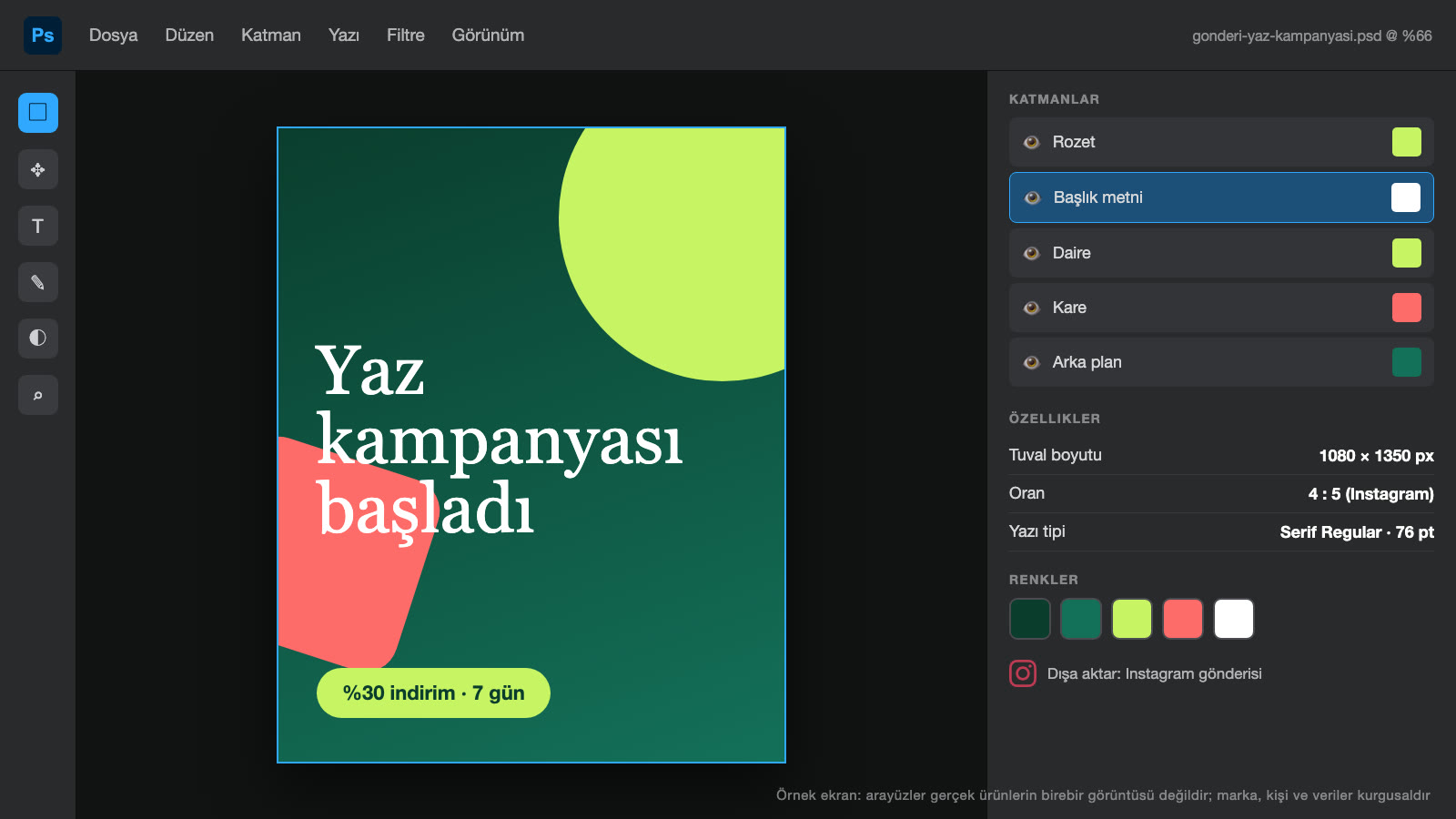
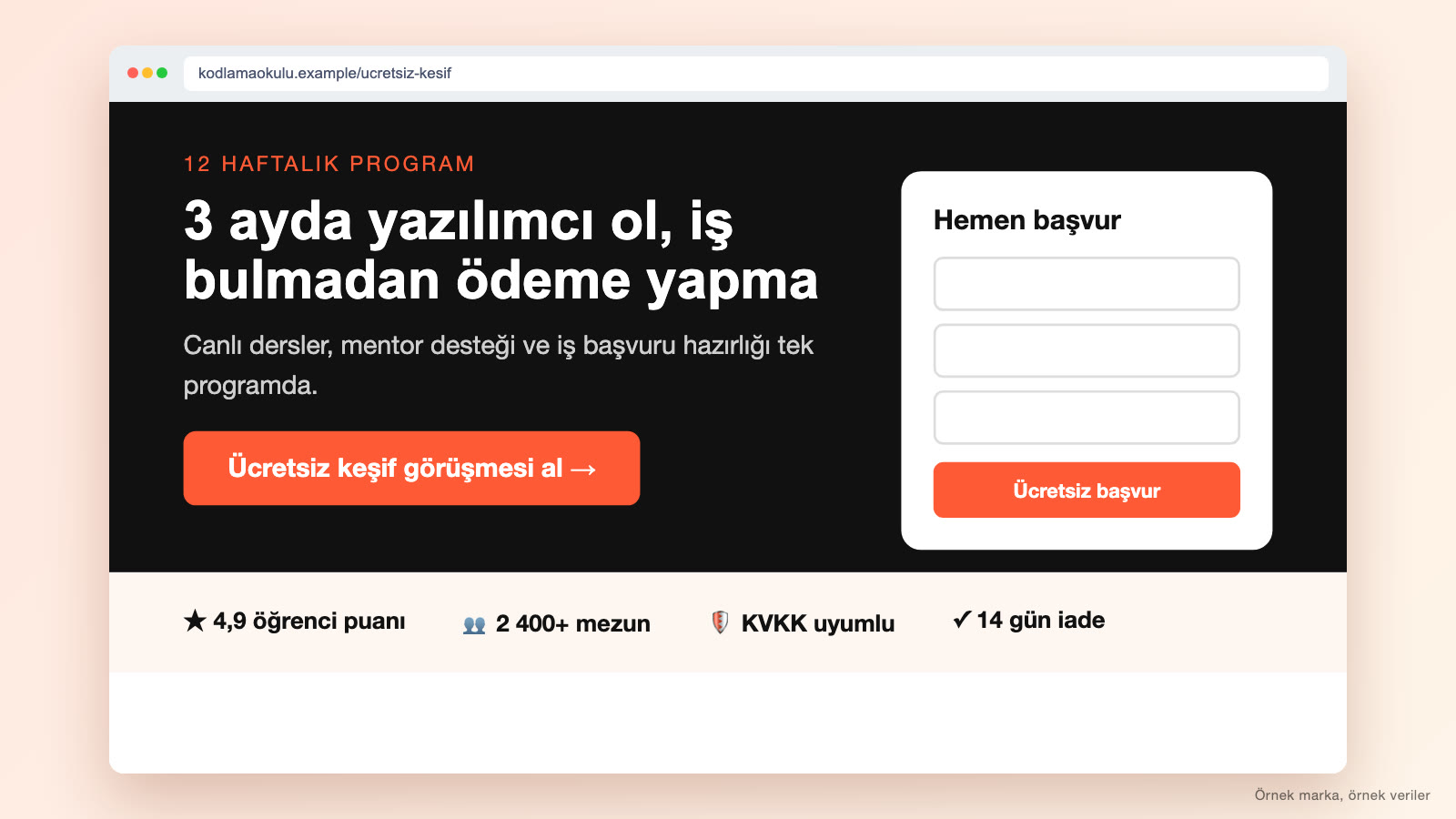
This article was prepared with AI support. The images in the article are sample screens drawn with code; they don’t show a real client, person, place or data.
Related work
A few examples of Media Fish’s work on this topic:


E-Commerce Site + SEO + GEO
Design · Software · Publishing

E-Commerce Site + SEO + SEM
Design · Software · Publishing

Corporate Website + SEO
Design · Software · Publishing
Software Engineer, Media Fish. Writes on our blog about web and software, mobile apps, artificial intelligence and search engine optimization (SEO).